
Food is Medicine
Food affects more than hunger. Consistent access to nutritious food can help people prevent, manage, and recover from health conditions while supporting stronger health outcomes across Alaska.
Food Bank of Alaska is helping build a statewide Food is Medicine network that connects healthcare, nutrition support, and community expertise. This work is grounded in Alaska's cultures, communities, and food systems.
What is Food is Medicine?
Food is Medicine is a national movement that recognizes nutritious food as an important part of preventing, managing, and treating disease.
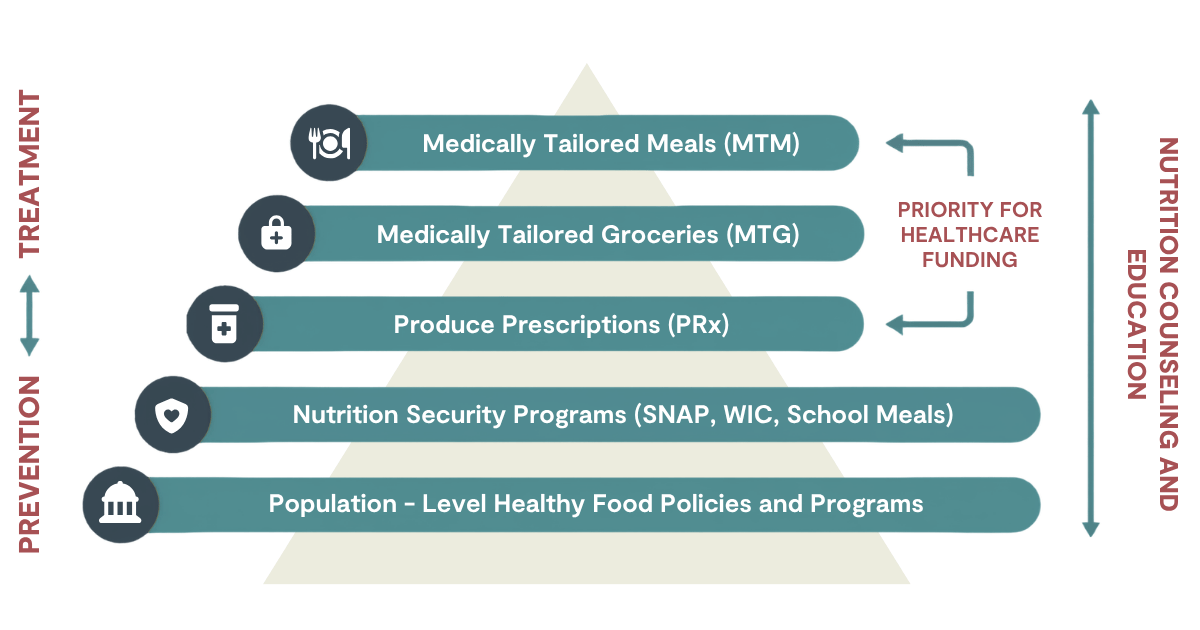
Food is Medicine programs help healthcare providers connect patients with nutrition support tailored to their health needs. These programs may include nutrition incentives, produce prescriptions, medically tailored groceries or meals, or other services that make healthy food more accessible.
This work complements broader nutrition programs such as SNAP and WIC. While those programs support household food access, Food is Medicine programs are often designed around a person’s specific health needs.
Prevention, Treatment, Nutrition Counseling, and Education
Food is Medicine encompasses a variety of interventions that integrate nutrition into healthcare delivery to prevent, manage, and treat diseases. Ultimately, reducing healthcare costs and enhancing overall quality of life.
Food is Medicine is part of the solution.
Building an approach that fits Alaska
In Alaska, food is deeply connected to culture, land, community, and identity. Food is Medicine efforts must reflect those connections.
Through the Alaska Food is Medicine Coalition, partners are developing an Alaska-specific approach that respects Alaska Native foodways, supports Tribal self-determination, and recognizes the different realities of urban and rural communities.
This is not about importing a national model and expecting it to work everywhere. It is about building an approach shaped by the knowledge and leadership of Alaska communities.
With statewide coordination and sustained investment, Food is Medicine programs can reach more people and strengthen connections between healthcare and nutrition security.
Stay Connected
The Alaska Food is Medicine listserv connects people and organizations working to advance nutrition incentive, produce prescription, and other Food is Medicine programs across the state. Subscribe for updates on new research and reports, Alaska Food is Medicine Coalition activities, upcoming events, funding opportunities, and helpful resources.
Food Bank of Alaska's Role
Food Bank of Alaska has worked to address hunger across the state since 1979. Through that experience, we see every day how access to nutritious food affects people’s health, financial stability, and quality of life.
In 2025, Food Bank of Alaska expanded this work by becoming the Alaska Department of Health’s Resource and Coordinating Agency for Produce Incentive and Food is Medicine programs.
Our role is to bring partners together, learn from programs already operating across the state, and help develop the infrastructure needed for long-term success.
Our statewide work includes:
- Assessing existing nutrition incentive, produce prescription, and Food is Medicine programs
- Convening and supporting the Alaska Food is Medicine Coalition
- Developing Alaska-specific training, tools, and technical assistance
- Supporting sustainable implementation and funding strategies
- Centering the priorities of rural, remote, Tribal, and medically underserved communities
Questions?
Food is Medicine in Alaska
Food is Medicine connects health care with access to nutritious food to improve health and food security. Alaska is building a coordinated statewide approach grounded in local food systems and responsive to the realities of delivering care across our state.
Understanding Alaska’s Food is Medicine Landscape
This statewide assessment examines Alaska’s nutrition incentive and medically prescribed Food is Medicine programs. It identifies existing strengths, barriers, and opportunities to expand sustainable access across Alaska, especially in rural and off-road communities.
Read the landscape assessment
A Roadmap for Food is Medicine in Alaska
Building on the landscape assessment, the 2026-2030 strategic plan outlines shared priorities and practical steps for strengthening Food is Medicine across Alaska. The plan focuses on Alaska-specific policy and food sourcing, technical assistance, sustainable financing, and shared evaluation.
Read the strategic planWant to learn more about Food is Medicine?
Alaska Food is Medicine Coalition
Founded in 2025, the Coalition brings together partners from Tribal and community organizations, healthcare systems, government agencies, food banks, schools, universities, farms, food retailers, and other sectors.
The Coalition is led by Food Bank of Alaska and the Alaska Department of Health Physical Activity and Nutrition unit.
Coalition members work to:
- Understand and strengthen existing nutrition incentive, produce prescription , and other Food is Medicine programs
- Share knowledge, resources, and technical assistance across sectors
- Collect meaningful impact data while respecting data sovereignty
- Support access to Traditional foods and Alaska Native foodways
- Identify sustainable funding opportunities
- Prioritize locally sourced food wherever feasible
The Coalition meets on the fourth Wednesday of each month.
Join the Coalition
Produce for Patients
Growing Hope
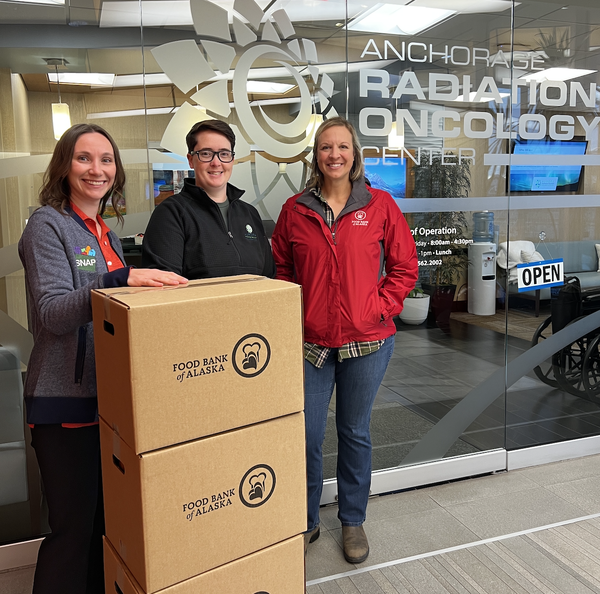
Growing Hope is an Anchorage-based Food is Medicine pilot supported by Food Bank of Alaska in partnership with the Alaska Department of Health, Anchorage Radiation Oncology Center, Providence Cancer Center, and the Alaska Cancer Partnership.
Eligible patients receiving cancer treatment at either participating center can pick up a weekly box of fresh produce for their household. The program is designed to make nutritious food easier to access during treatment. During the program’s first six months, 138 patients enrolled and 649 boxes of produce were distributed. Current funding for Growing Hope is scheduled to end in June 2027.
What we learn from Growing Hope will help shape future Food is Medicine programs and strategies across Alaska.
WHAT PEOPLE ARE SAYING
"It was such a blessing for patients to have healthy foods brought right to them; they didn’t have to worry about getting to the store when they weren't feeling well and they didn't have to stress about whether they could afford produce when they've had difficulty working while going through cancer treatment."
- Clinic Staff
Frequently Asked Questions
Are there any nutrition incentive, produce prescription, or other Food is Medicine programs in Alaska?
YES! Food is Medicine programs are operating in communities all across Alaska. The Alaska Nutrition Incentive and Produce Prescription Food is Medicine: Statewide Landscape Assessment identifies and examines existing programs. You can find a list of produce prescription programs in Table 1 and a list of nutrition incentive programs in Table 2.
How can I find a nutrition incentive, produce prescription, or other Food is Medicine program near me?
To learn whether a program is available near you, email FIM@foodbankofalaska.org.
How can healthcare providers refer patients to a nutrition incentive, produce prescription, or other Food is Medicine program?
Currently, there is no central referral system for Food is Medicine programs in Alaska. Programs have different eligibility requirements and referral processes.
Healthcare providers can email FIM@foodbankofalaska.org to learn more about whether a program is available for their patients.
Is there funding for nutrition incentive, produce prescription, or other Food is Medicine programs in Alaska?
How is Food is Medicine different from food access?
- Food access is about ensuring people can reliably get enough nutritious, affordable, and culturally appropriate food to support a healthy, active life. To be considered “accessible” food must be available, affordable, and safe to consume.
- Food is Medicine builds on food access work by intentionally connecting patients to food and nutrition resources through their healthcare providers, often through programs designed to support specific health conditions or health goals.